
Pathway guide
Study in Germany: German Language & Preparation Guide
Germany’s public universities, vocational training and healthcare system attract many Kerala students every year. Whatever your route, German proficiency is usually the longest step — this guide explains what level you need and how to plan for it.
Why Germany
Why students choose Germany
- Low or no tuition fees at most public universities
- Globally recognised degrees and research institutions
- Paid vocational training (Ausbildung) in many sectors
- Strong demand for skilled workers, including in healthcare
- Post-study opportunities to look for work
Language requirements
German proficiency levels explained
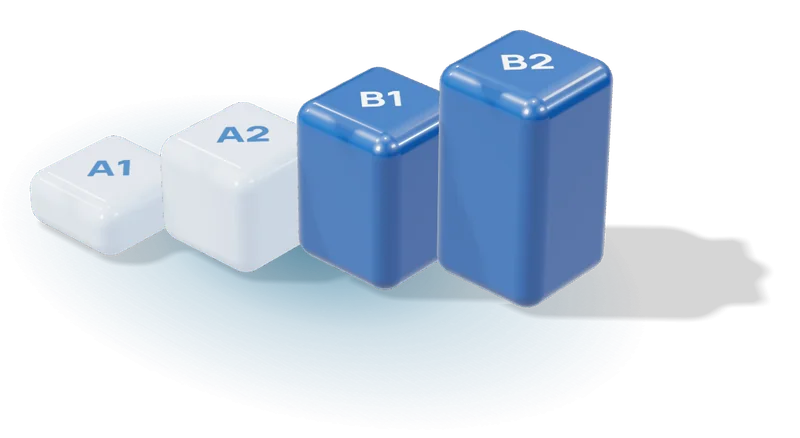
German levels follow the CEFR scale: A1 and A2 (basic), B1 and B2 (independent), C1 and C2 (proficient). Most Germany pathways specify a minimum level and sometimes a specific exam.
GCA teaches A1 to B2 and prepares students for Goethe, telc and ÖSD exams.
Pathways
Which level does your pathway need?
Typical requirements — always confirm with your university, employer or authority. Last reviewed October 2026.
Usually C1
German-taught degrees
Bachelor’s and Master’s programmes taught in German typically ask for C1 via TestDaF, DSH, Goethe C1 or telc C1 Hochschule. A1–B2 is the foundation for getting there.
Often none for admission
English-taught degrees
German may not be required for admission, but A1–B1 makes daily life, part-time jobs and the job search after graduation far easier.
Commonly B1–B2
Studienkolleg
Preparatory colleges for students whose school certificate isn’t directly accepted. Entrance exams are in German.
Typically B1–B2
Ausbildung
Paid vocational training combining work and school. Employers usually ask for at least B1; many prefer B2.
Often B2
Nursing
Recognition as a nurse generally requires B2-level German. Some routes allow you to start with B1. See German for nurses.
Documents
Documents to start organising early
- Valid passport
- School and university certificates and transcripts
- German language certificate at the required level
- CV in the German format (Lebenslauf)
- Proof of financial resources where required (e.g. blocked account)
- Health insurance
Exact requirements depend on your pathway and change over time.
Avoid these
Common mistakes
- Starting German too late and rushing the higher levels
- Skipping levels — gaps in A2 grammar show up badly at B1/B2
- Booking an exam the authority or employer doesn’t accept
- Relying on recorded videos with no speaking practice
- Trusting promises of guaranteed jobs or visas
Important: language guidance, not legal advice
German Cafe Academy is a language academy. Information on this page is general guidance about language preparation. For visa, immigration and recognition rules, always refer to official sources such as the German Missions in India and make-it-in-germany.com, and consult a qualified adviser where needed.
Plan your German timeline
Tell us your pathway and target intake. We’ll map the levels and exam dates you need.
Do I need German to study in Germany?
For German-taught degrees, yes — usually at C1 level (e.g. TestDaF, DSH or Goethe C1). English-taught programmes may not require German for admission, but German helps significantly with daily life, part-time work and jobs.
What level is needed for Ausbildung?
Most Ausbildung programmes ask for at least B1, and many employers prefer B2. Requirements vary by employer and field.
Does GCA provide visa or admission services?
GCA's focus is German language training and exam preparation. For visa and immigration matters, always refer to official sources such as the German Missions in India and make-it-in-germany.com.
When should I start learning German?
As early as possible. Reaching B1 typically takes several months of consistent study, and B2 longer. Starting early keeps your application timeline realistic.

Next step
Talk to a German Course Counsellor
Tell us your goal and current level. A counsellor will recommend the right course, share the next batch dates and the current fee — no obligation.